
Ever wonder how your iPhone gets from raw materials to... Továbbiak megjelenítése
 Business Studies7 megtekintések·Frissítve Jun 3, 2026·5 oldal
Exploring the Sectors of Economic Activity
1 / 5
1
of 5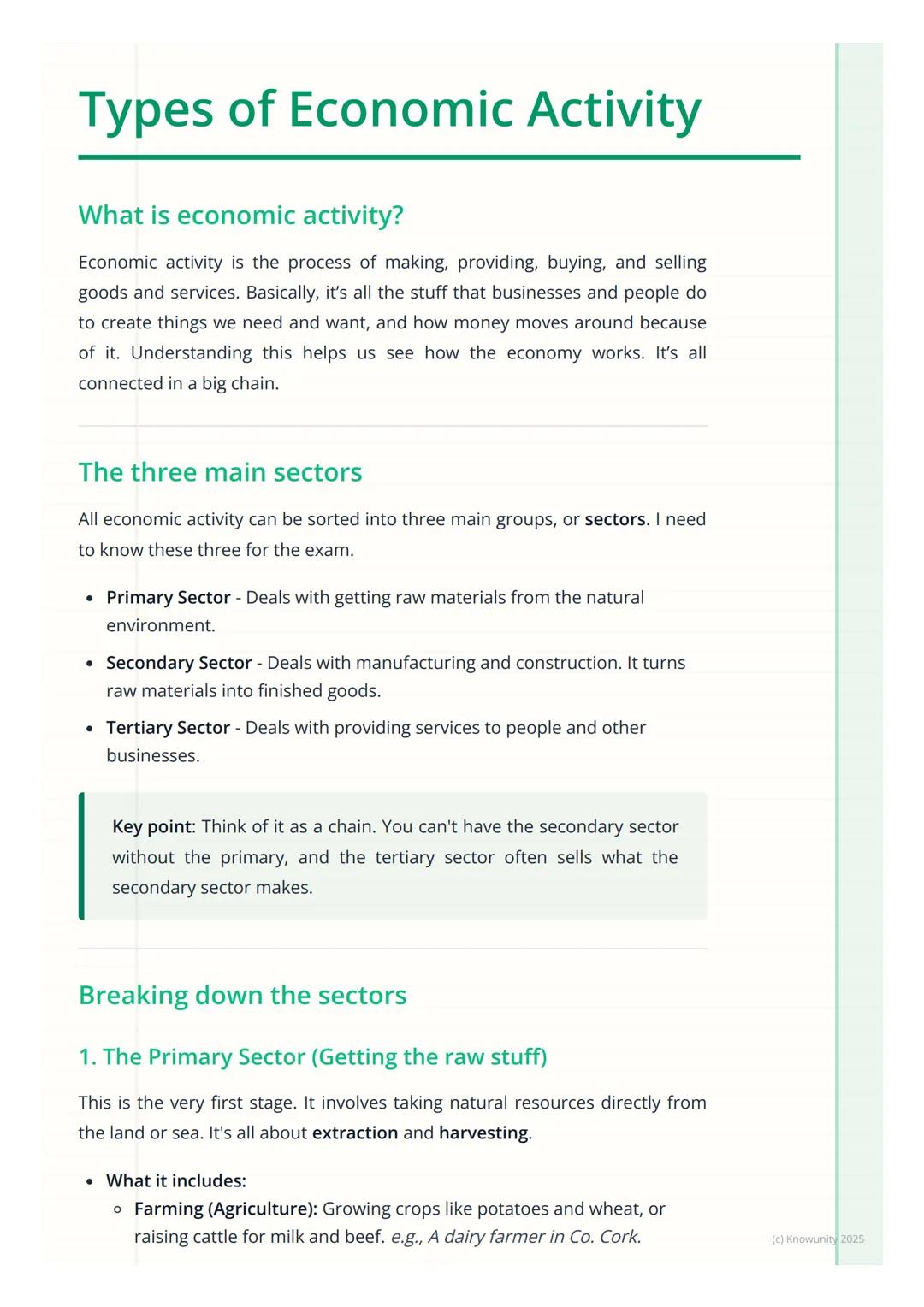
What is Economic Activity?
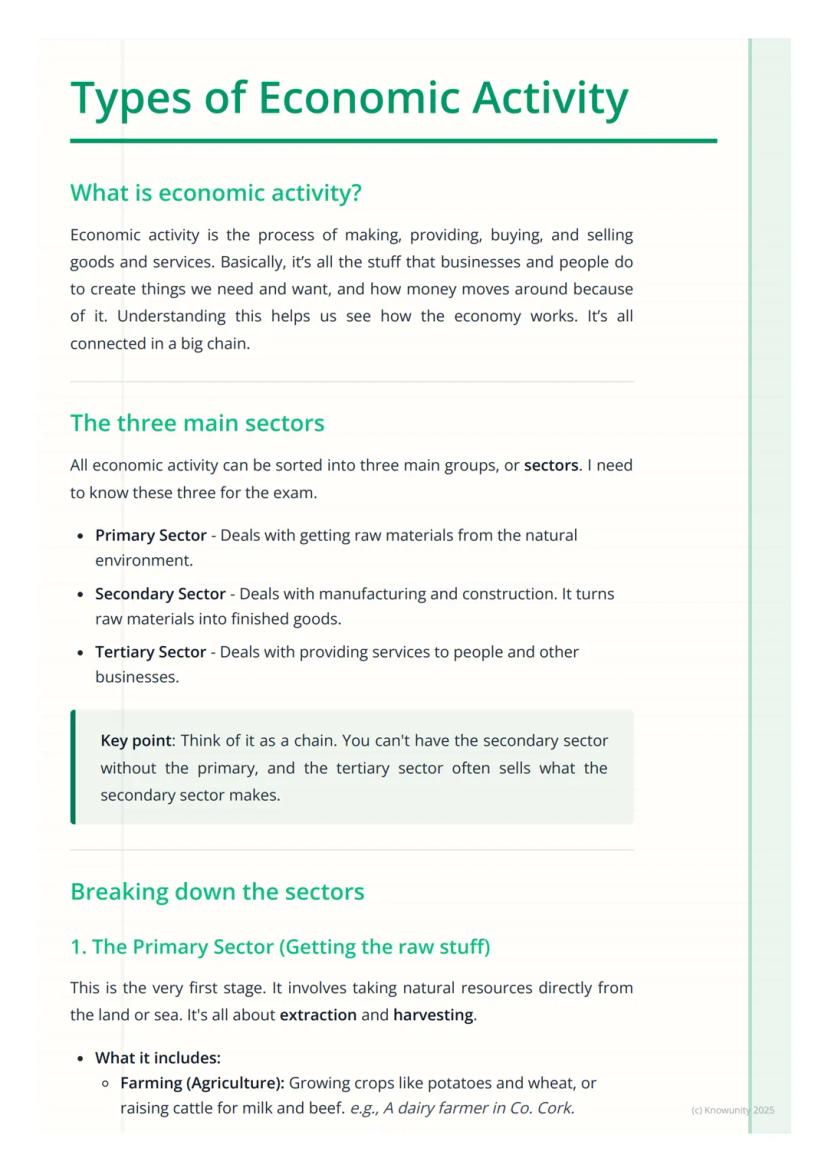
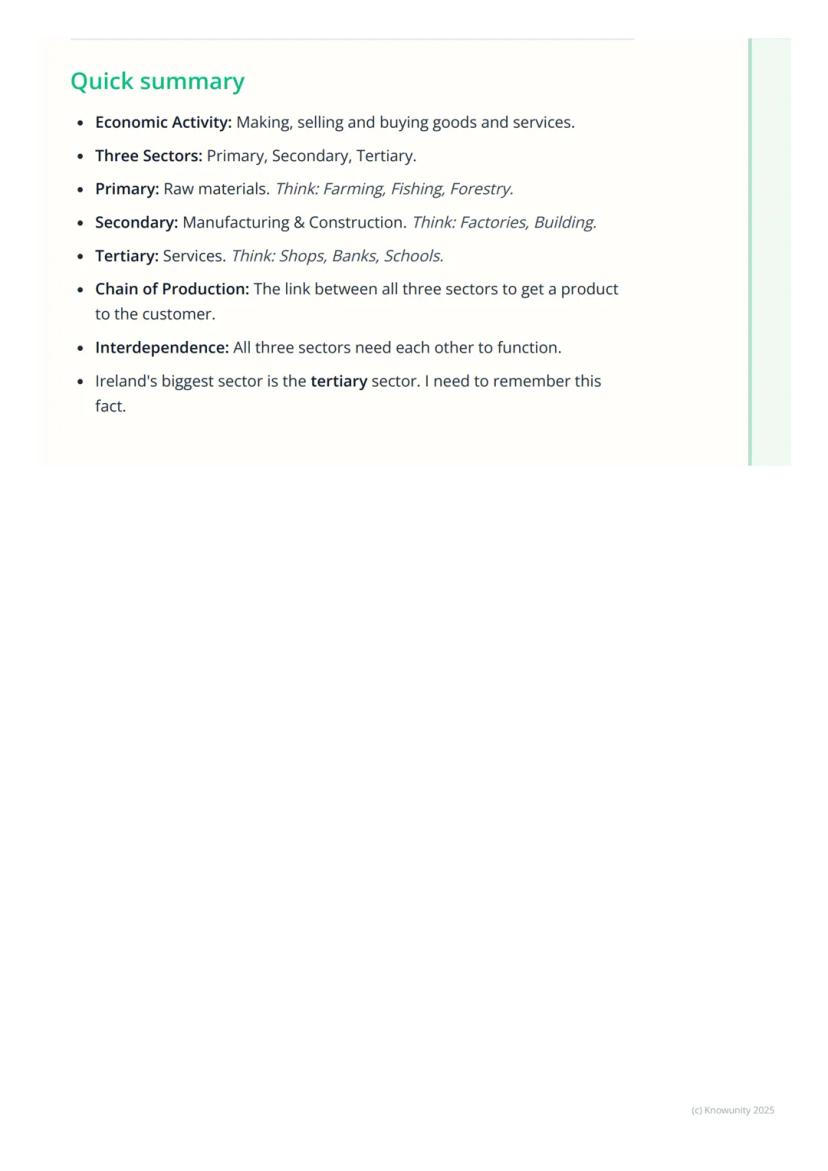
Think of economic activity as everything people and businesses do to create stuff we need and want - from growing food to building houses to running shops. It's basically how money moves around the economy and how we get all the things that make our lives work.
All this activity gets sorted into three main sectors: Primary, Secondary, and Tertiary. Here's the thing - they're all connected like links in a chain. You literally can't have one without the others.
Primary Sector deals with getting raw materials straight from nature. Secondary Sector takes those materials and turns them into finished products. Tertiary Sector provides services to people and businesses.
Key Point: Ireland's economy relies heavily on all three sectors working together - no single sector can survive on its own!
2
of 5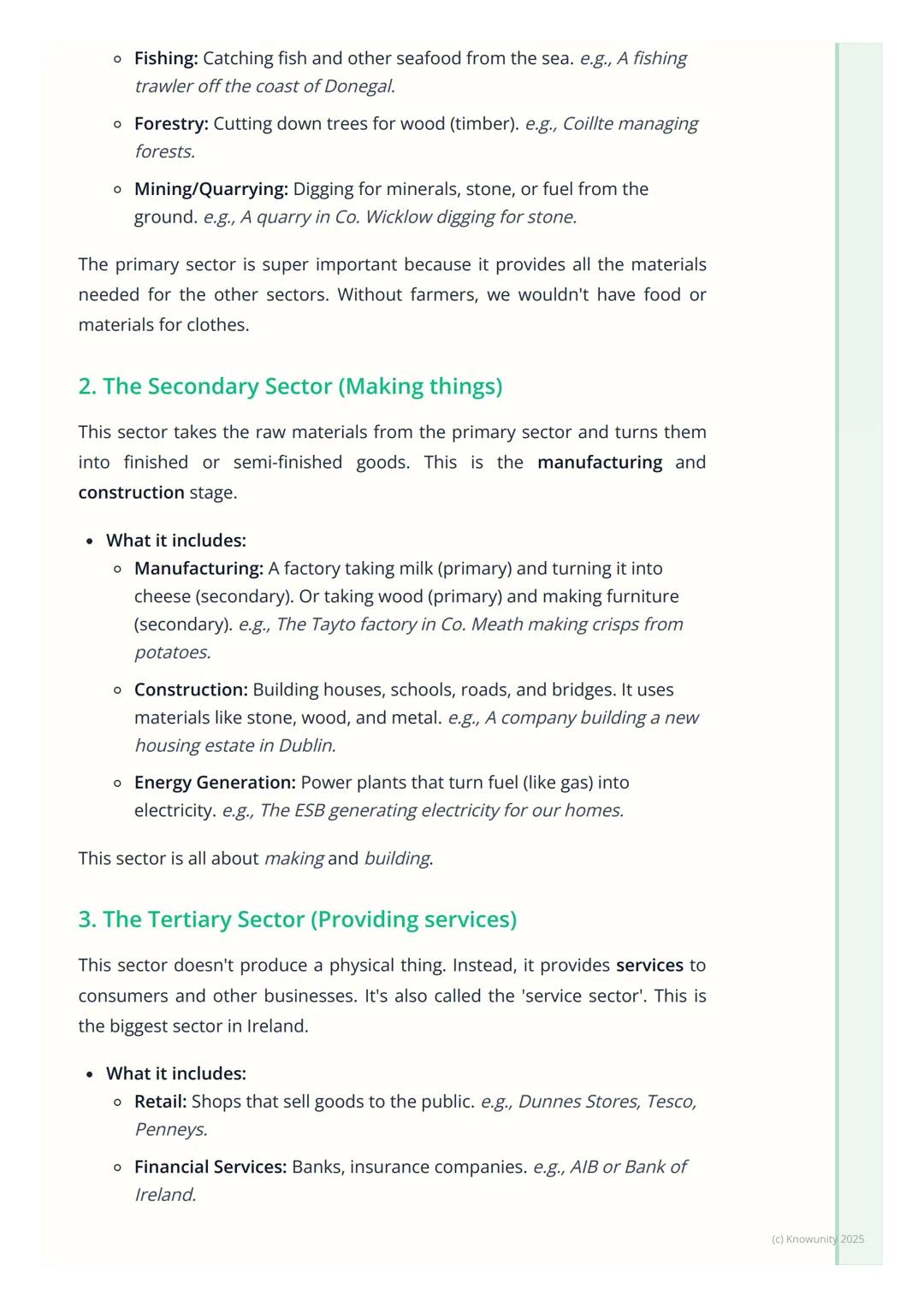
Primary Sector - Getting the Raw Stuff
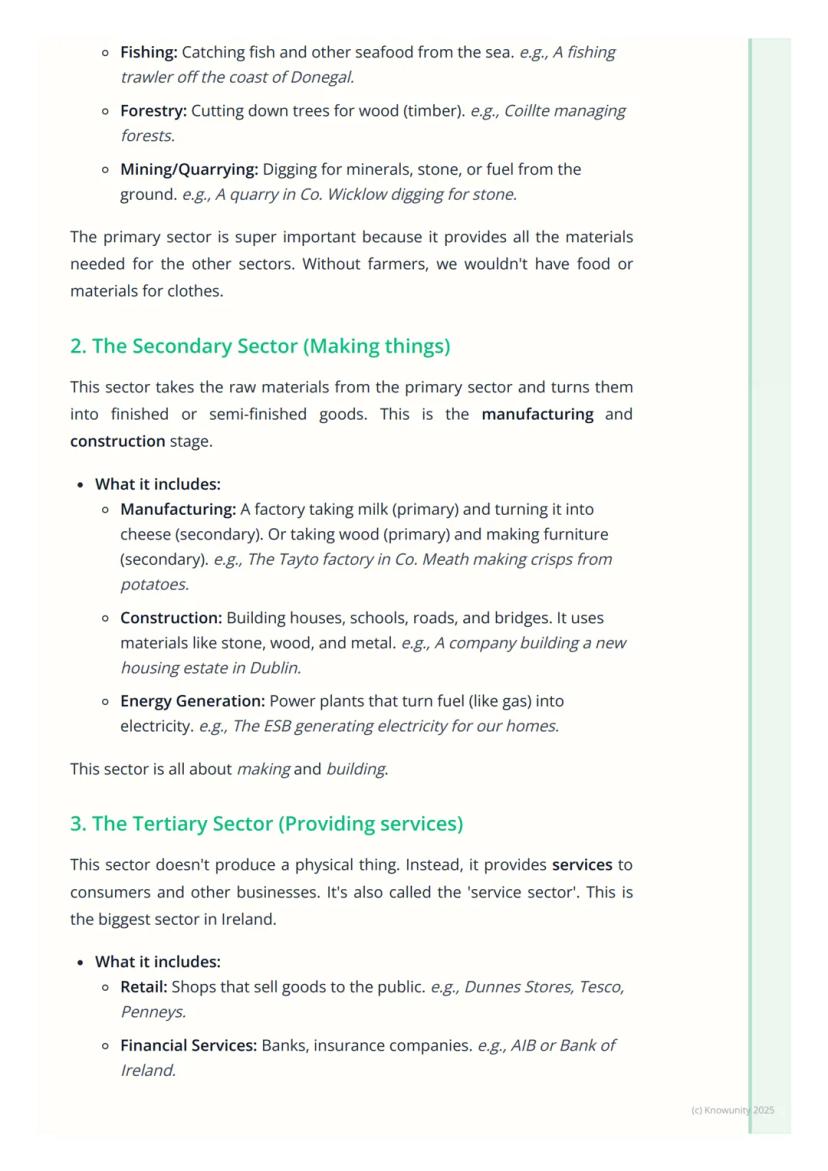
The Primary Sector is where it all begins - extracting natural resources directly from the land or sea. Think farmers, fishers, and anyone who digs stuff up from the ground.
This includes farming (like dairy farmers in Cork growing crops or raising cattle), fishing (trawlers off Donegal's coast), forestry (Coillte managing Ireland's forests), and mining/quarrying (stone quarries in Wicklow).
Without the primary sector, literally nothing else would exist. No food, no materials for clothes, no wood for furniture - you get the idea.
Remember: Primary = getting stuff straight from nature, no processing involved yet!
3
of 5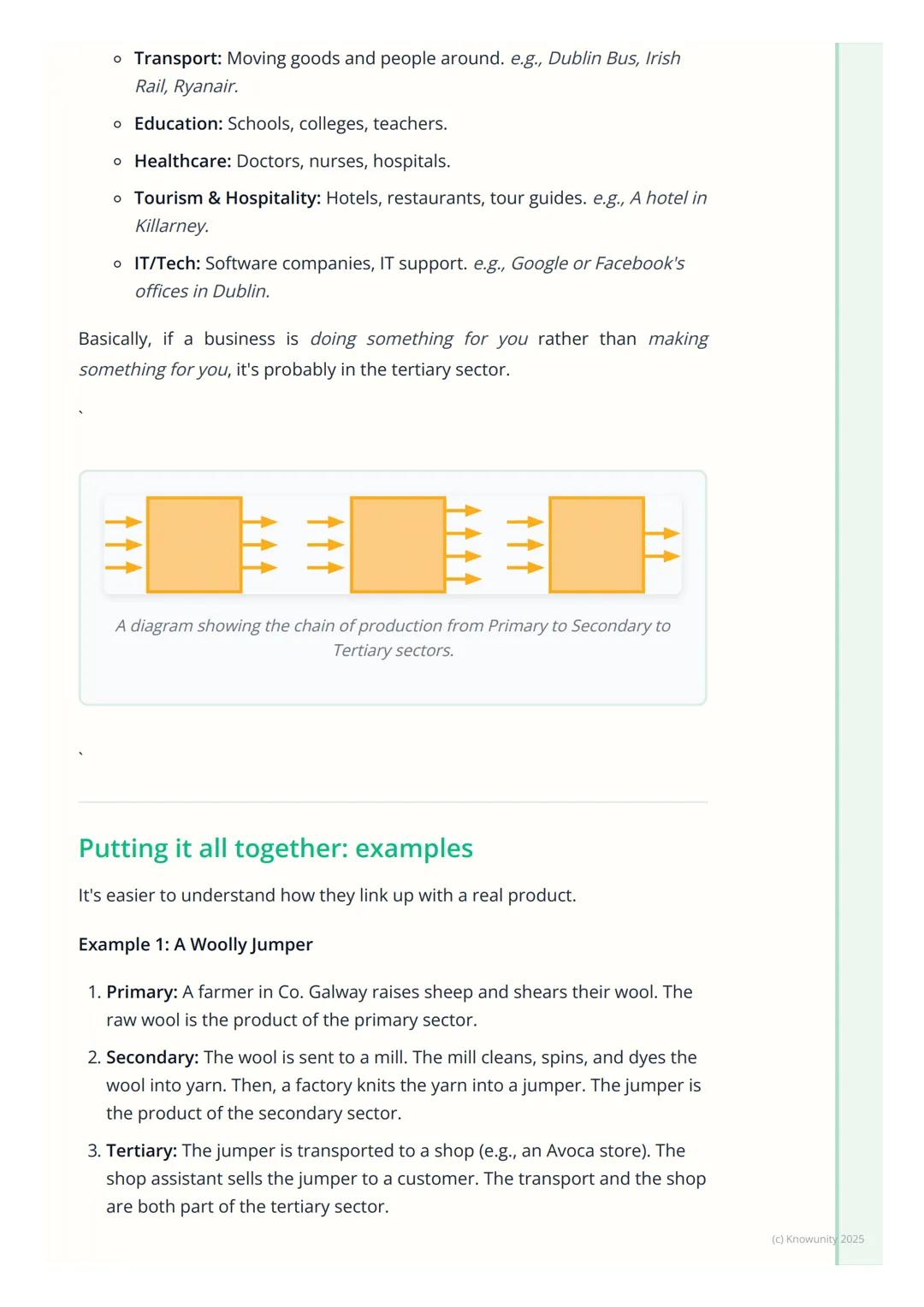
Secondary Sector - Making Things
The Secondary Sector takes those raw materials and transforms them into actual products people can use. This is all about manufacturing and construction.
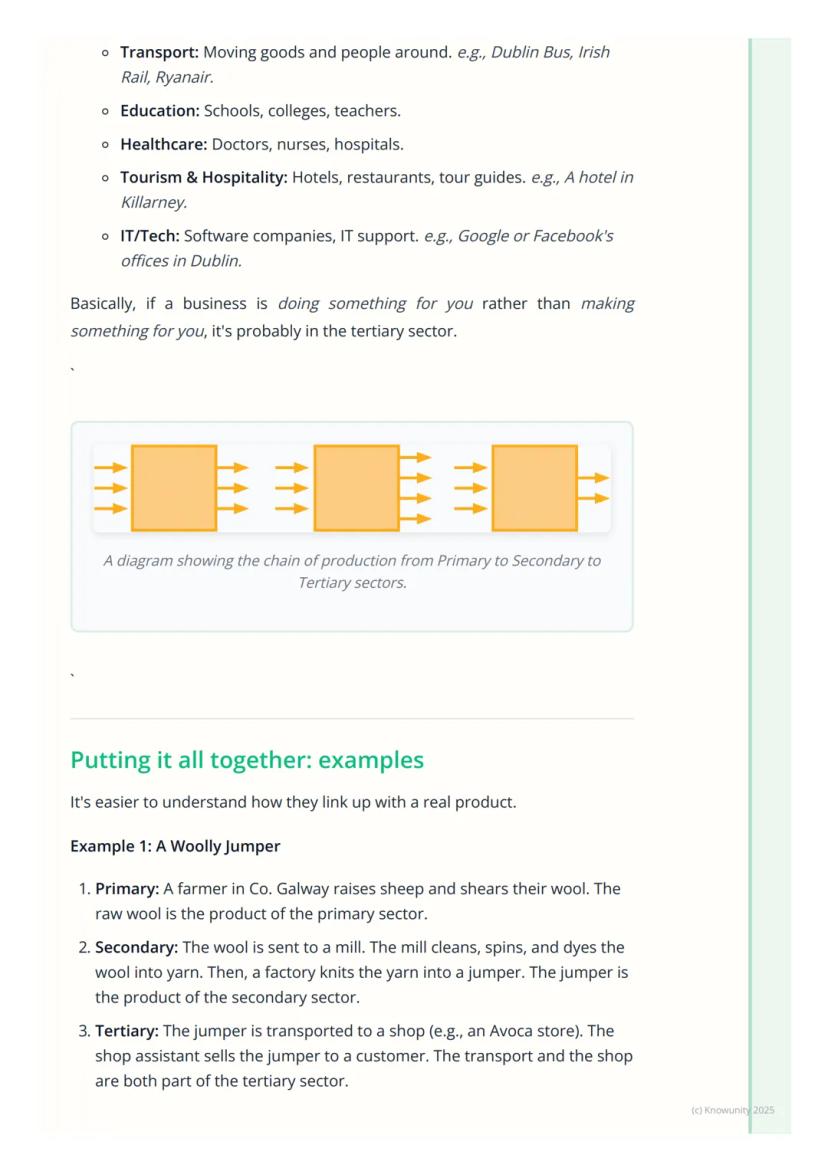
Manufacturing means factories turning milk into cheese, wood into furniture, or potatoes into Tayto crisps in Meath. Construction covers building houses, schools, and roads using materials like stone and timber.
Energy generation also fits here - power plants turning fuel into electricity for your home. Basically, if someone's making or building something physical, it's secondary sector.
Quick Check: Secondary = turning raw materials into finished products that people actually want to buy!
4
of 5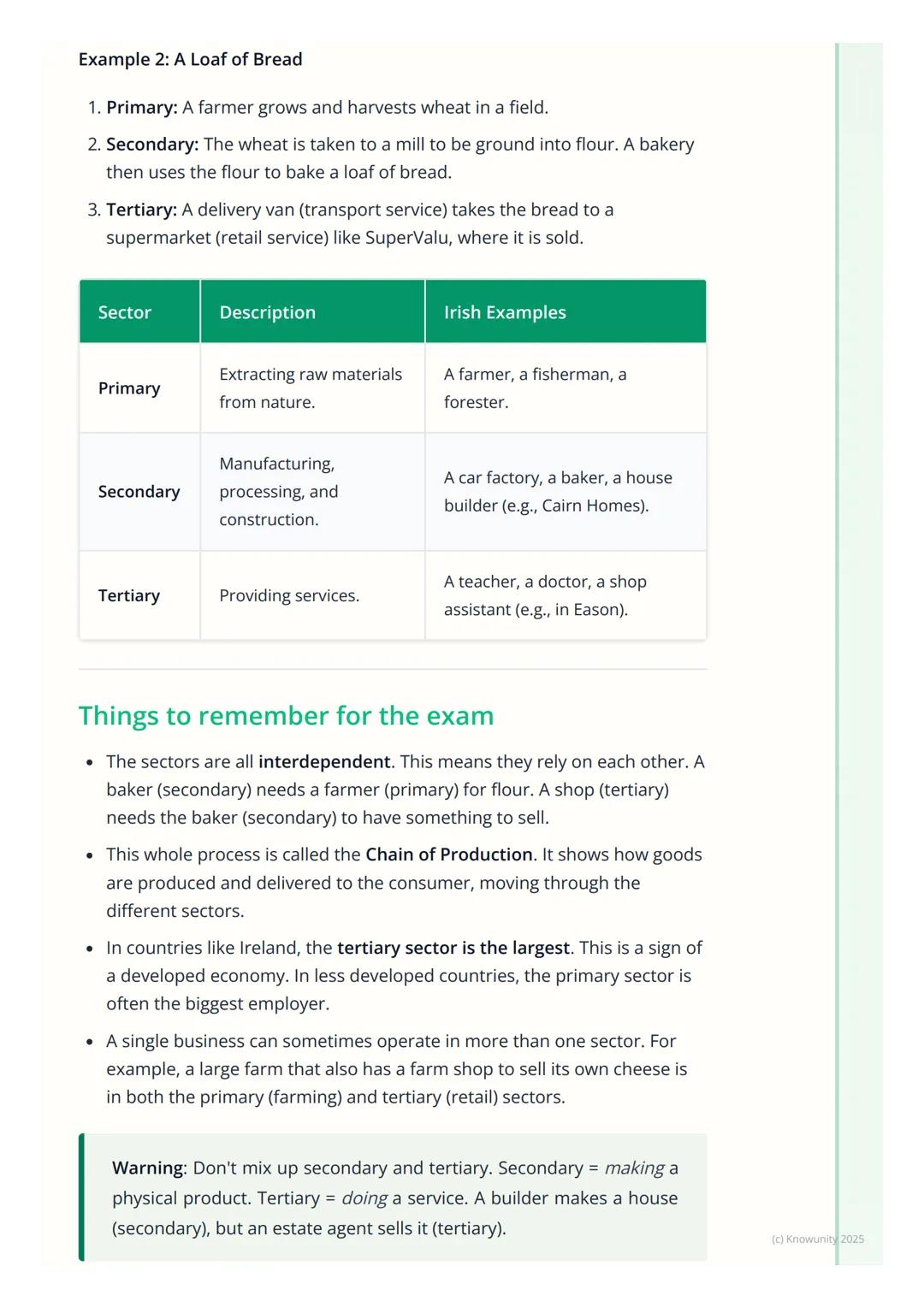
Tertiary Sector - Providing Services
The Tertiary Sector doesn't make physical things - it provides services to people and businesses. This is actually Ireland's biggest sector, which shows we're a developed economy.
This includes retail (Dunnes Stores, Tesco), financial services (AIB, Bank of Ireland), transport (Dublin Bus, Ryanair), education (schools and teachers), healthcare (doctors and hospitals), and tourism (hotels in Killarney).
If a business is doing something for you rather than making something for you, it's probably tertiary sector. Ireland's economy massively depends on this sector.
Pro Tip: If you can't physically hold what the business produces, it's likely a tertiary sector service!
5
of 5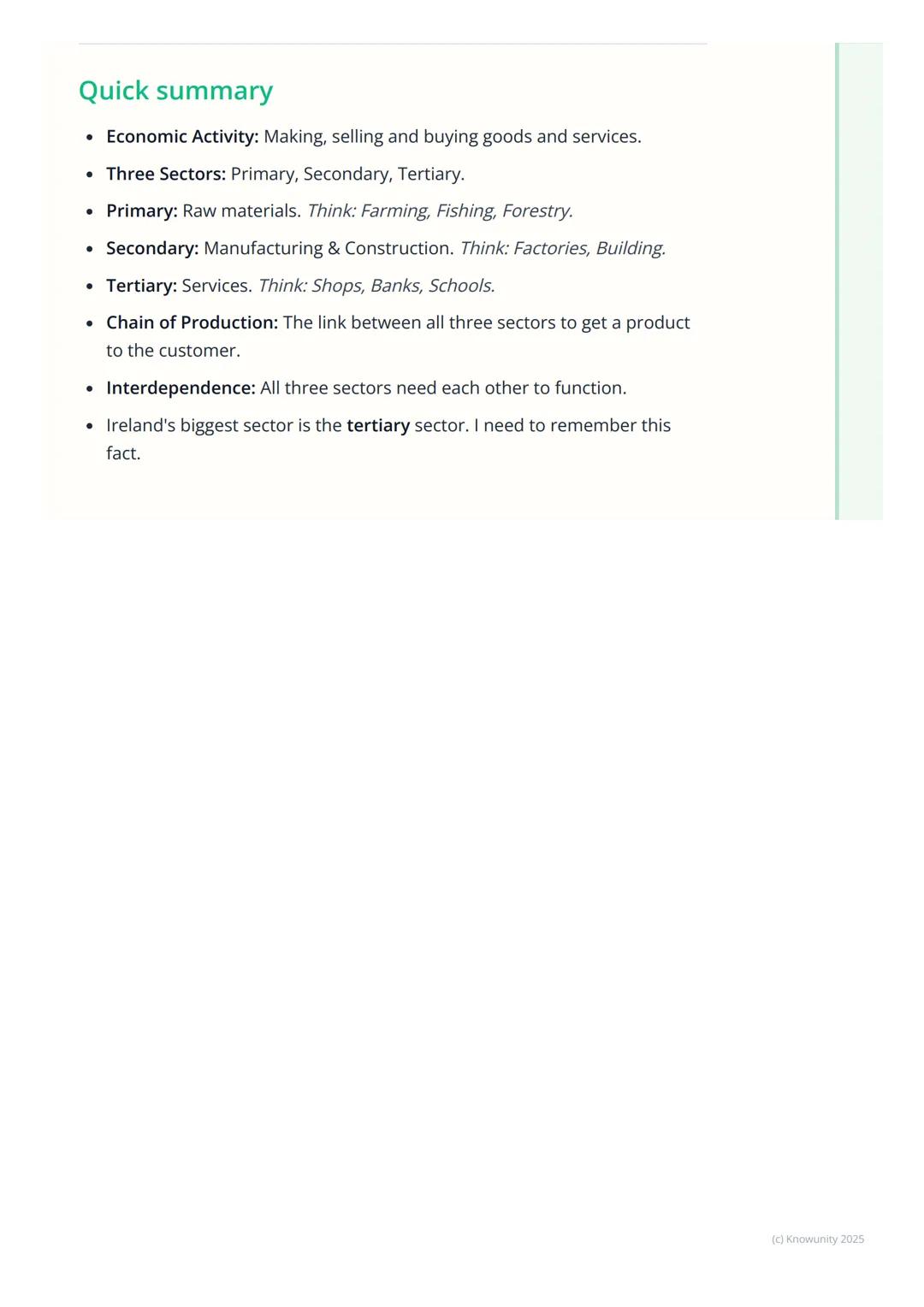
The Chain of Production
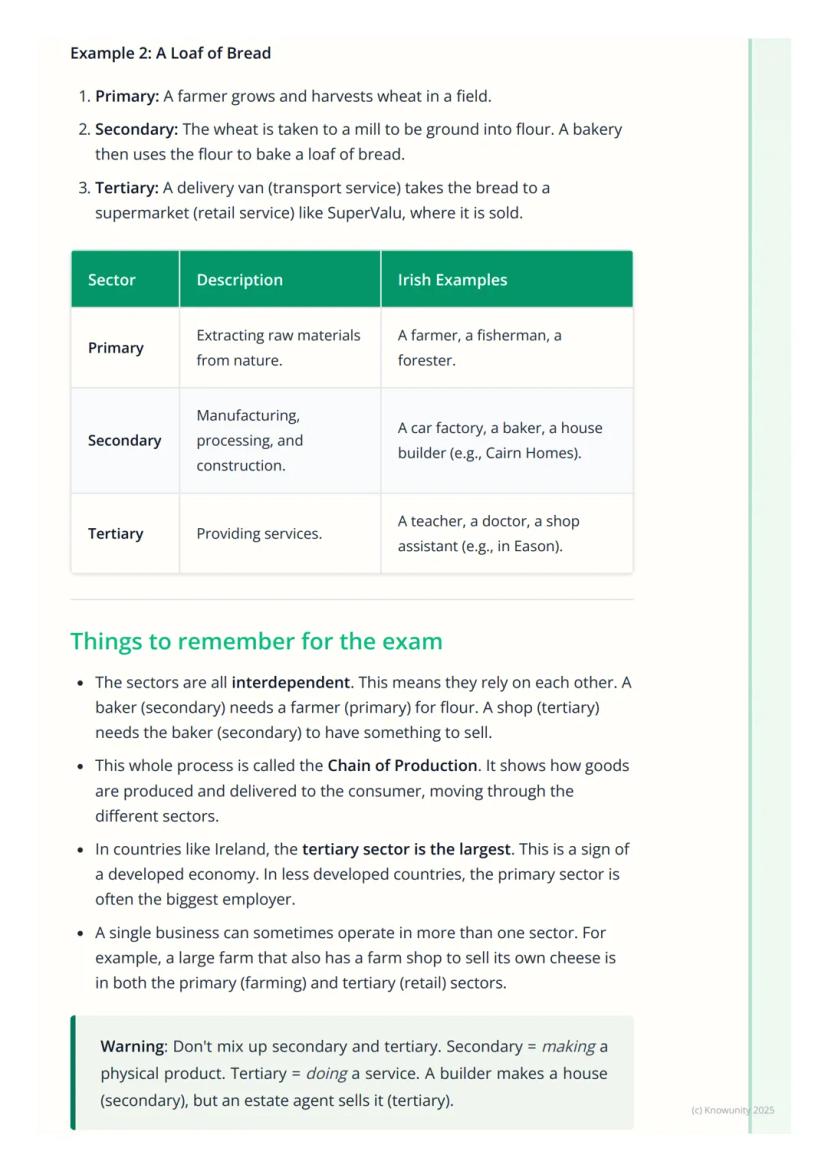
Here's how it all connects with real examples. Take a woolly jumper: farmers raise sheep (primary), mills turn wool into yarn and knit jumpers (secondary), then Avoca stores sell them to customers (tertiary).
Or a loaf of bread: farmers grow wheat (primary), mills grind flour and bakeries make bread (secondary), SuperValu sells it (tertiary). Each sector depends on the others - this is called interdependence.
The Chain of Production shows how products move through all three sectors to reach consumers. In Ireland, tertiary is biggest, but we still need primary and secondary to function.
Exam Alert: Remember that all sectors are interdependent - they absolutely cannot work without each other!
Azt hittük, soha nem fogod megkérdezni...
Mi a Knowunity MI társ?
MI Társunk egy diákközpontú MI eszköz, amely többet nyújt puszta válaszoknál. Millió Knowunity erőforrásra épülve releváns információkat, személyre szabott tanulási terveket, kvízeket és tartalmat biztosít közvetlenül a chatben, alkalmazkodva az egyéni tanulási utadhoz.
Honnan tudom letölteni a Knowunity appot?
Az appot letöltheted a Google Play Store-ból és az Apple App Store-ból.
Tényleg ingyenes a Knowunity?
Pontosan! Élvezd az ingyenes hozzáférést a tanulási tartalmakhoz, kapcsolódj diáktársaiddal, és kapj azonnali segítséget – mind a kezed ügyében.
Legnépszerűbb tananyagok Business Studies tantárgyból
1Legnépszerűbb tananyagok
9Nem találod amit keresel? Fedezz fel más tantárgyakat.
A diákok imádnak minket — és téged is fognak.
4.6/5App Store
4.7/5Google Play
Az alkalmazás nagyon könnyen használható és jól megtervezett. Mindent megtaláltam, amit eddig kerestem, és sokat tudtam tanulni a prezentációkból! Biztosan használni fogom az alkalmazást egy osztályfeladathoz! És persze inspirációként is nagyszerűen segít.
Stefan SiOS felhasználó
Ez az alkalmazás tényleg nagyszerű. Olyan sok tanulási jegyzet és segítség van benne [...]. Például a francia a problémás tantárgyam, és az alkalmazásban olyan sok segítség lehetőség van. Ennek az alkalmazásnak köszönhetően javult a franciám. Mindenkinek ajánlanám.
Samantha KlichAndroid felhasználó
Hű, tényleg lenyűgözött. Csak úgy kipróbáltam az alkalmazást, mert sokszor láttam reklámozva, és teljesen megdöbbentett. Ez az alkalmazás AZ A SEGÍTSÉG, amire az iskolában szükséged van, és mindenekelőtt olyan sok mindent kínál, mint például gyakorlatokat és összefoglalókat, amik nekem személyesen NAGYON hasznosak voltak.
AnnaiOS felhasználó
Business Studies7 megtekintések·Frissítve Jun 3, 2026·5 oldalExploring the Sectors of Economic Activity
Ever wonder how your iPhone gets from raw materials to your pocket, or why some countries focus more on farming whilst others are all about services? Economic activity is basically all the making, buying, and selling that happens around us... Továbbiak megjelenítése
1
of 5Regisztrálj, hogy lásd a tartalmat. Teljesen ingyenes!
- Hozzáférés minden dokumentumhoz
- Javítsd a jegyeidet
- Csatlakozz diákok millióihoz
What is Economic Activity?
Think of economic activity as everything people and businesses do to create stuff we need and want - from growing food to building houses to running shops. It's basically how money moves around the economy and how we get all the things that make our lives work.
All this activity gets sorted into three main sectors: Primary, Secondary, and Tertiary. Here's the thing - they're all connected like links in a chain. You literally can't have one without the others.
Primary Sector deals with getting raw materials straight from nature. Secondary Sector takes those materials and turns them into finished products. Tertiary Sector provides services to people and businesses.
Key Point: Ireland's economy relies heavily on all three sectors working together - no single sector can survive on its own!
2
of 5Regisztrálj, hogy lásd a tartalmat. Teljesen ingyenes!
- Hozzáférés minden dokumentumhoz
- Javítsd a jegyeidet
- Csatlakozz diákok millióihoz
Primary Sector - Getting the Raw Stuff
The Primary Sector is where it all begins - extracting natural resources directly from the land or sea. Think farmers, fishers, and anyone who digs stuff up from the ground.
This includes farming (like dairy farmers in Cork growing crops or raising cattle), fishing (trawlers off Donegal's coast), forestry (Coillte managing Ireland's forests), and mining/quarrying (stone quarries in Wicklow).
Without the primary sector, literally nothing else would exist. No food, no materials for clothes, no wood for furniture - you get the idea.
Remember: Primary = getting stuff straight from nature, no processing involved yet!
3
of 5Regisztrálj, hogy lásd a tartalmat. Teljesen ingyenes!
- Hozzáférés minden dokumentumhoz
- Javítsd a jegyeidet
- Csatlakozz diákok millióihoz
Secondary Sector - Making Things
The Secondary Sector takes those raw materials and transforms them into actual products people can use. This is all about manufacturing and construction.
Manufacturing means factories turning milk into cheese, wood into furniture, or potatoes into Tayto crisps in Meath. Construction covers building houses, schools, and roads using materials like stone and timber.
Energy generation also fits here - power plants turning fuel into electricity for your home. Basically, if someone's making or building something physical, it's secondary sector.
Quick Check: Secondary = turning raw materials into finished products that people actually want to buy!
4
of 5Regisztrálj, hogy lásd a tartalmat. Teljesen ingyenes!
- Hozzáférés minden dokumentumhoz
- Javítsd a jegyeidet
- Csatlakozz diákok millióihoz
Tertiary Sector - Providing Services
The Tertiary Sector doesn't make physical things - it provides services to people and businesses. This is actually Ireland's biggest sector, which shows we're a developed economy.
This includes retail (Dunnes Stores, Tesco), financial services (AIB, Bank of Ireland), transport (Dublin Bus, Ryanair), education (schools and teachers), healthcare (doctors and hospitals), and tourism (hotels in Killarney).
If a business is doing something for you rather than making something for you, it's probably tertiary sector. Ireland's economy massively depends on this sector.
Pro Tip: If you can't physically hold what the business produces, it's likely a tertiary sector service!
5
of 5Regisztrálj, hogy lásd a tartalmat. Teljesen ingyenes!
- Hozzáférés minden dokumentumhoz
- Javítsd a jegyeidet
- Csatlakozz diákok millióihoz
The Chain of Production
Here's how it all connects with real examples. Take a woolly jumper: farmers raise sheep (primary), mills turn wool into yarn and knit jumpers (secondary), then Avoca stores sell them to customers (tertiary).
Or a loaf of bread: farmers grow wheat (primary), mills grind flour and bakeries make bread (secondary), SuperValu sells it (tertiary). Each sector depends on the others - this is called interdependence.
The Chain of Production shows how products move through all three sectors to reach consumers. In Ireland, tertiary is biggest, but we still need primary and secondary to function.
Exam Alert: Remember that all sectors are interdependent - they absolutely cannot work without each other!
Azt hittük, soha nem fogod megkérdezni...
Mi a Knowunity MI társ?
MI Társunk egy diákközpontú MI eszköz, amely többet nyújt puszta válaszoknál. Millió Knowunity erőforrásra épülve releváns információkat, személyre szabott tanulási terveket, kvízeket és tartalmat biztosít közvetlenül a chatben, alkalmazkodva az egyéni tanulási utadhoz.
Honnan tudom letölteni a Knowunity appot?
Az appot letöltheted a Google Play Store-ból és az Apple App Store-ból.
Tényleg ingyenes a Knowunity?
Pontosan! Élvezd az ingyenes hozzáférést a tanulási tartalmakhoz, kapcsolódj diáktársaiddal, és kapj azonnali segítséget – mind a kezed ügyében.
Legnépszerűbb tananyagok Business Studies tantárgyból
1Legnépszerűbb tananyagok
9Nem találod amit keresel? Fedezz fel más tantárgyakat.
A diákok imádnak minket — és téged is fognak.
4.6/5App Store
4.7/5Google Play
Az alkalmazás nagyon könnyen használható és jól megtervezett. Mindent megtaláltam, amit eddig kerestem, és sokat tudtam tanulni a prezentációkból! Biztosan használni fogom az alkalmazást egy osztályfeladathoz! És persze inspirációként is nagyszerűen segít.
Stefan SiOS felhasználó
Ez az alkalmazás tényleg nagyszerű. Olyan sok tanulási jegyzet és segítség van benne [...]. Például a francia a problémás tantárgyam, és az alkalmazásban olyan sok segítség lehetőség van. Ennek az alkalmazásnak köszönhetően javult a franciám. Mindenkinek ajánlanám.
Samantha KlichAndroid felhasználó
Hű, tényleg lenyűgözött. Csak úgy kipróbáltam az alkalmazást, mert sokszor láttam reklámozva, és teljesen megdöbbentett. Ez az alkalmazás AZ A SEGÍTSÉG, amire az iskolában szükséged van, és mindenekelőtt olyan sok mindent kínál, mint például gyakorlatokat és összefoglalókat, amik nekem személyesen NAGYON hasznosak voltak.
AnnaiOS felhasználó