
Ever wondered what makes plants so different from animals? It... Továbbiak megjelenítése
 Biology8 megtekintések·Frissítve Jun 3, 2026·6 oldal
Understanding Plant Cells: Key Structures and Differences
1 / 6
1
of 6
Introduction to Plant Cells
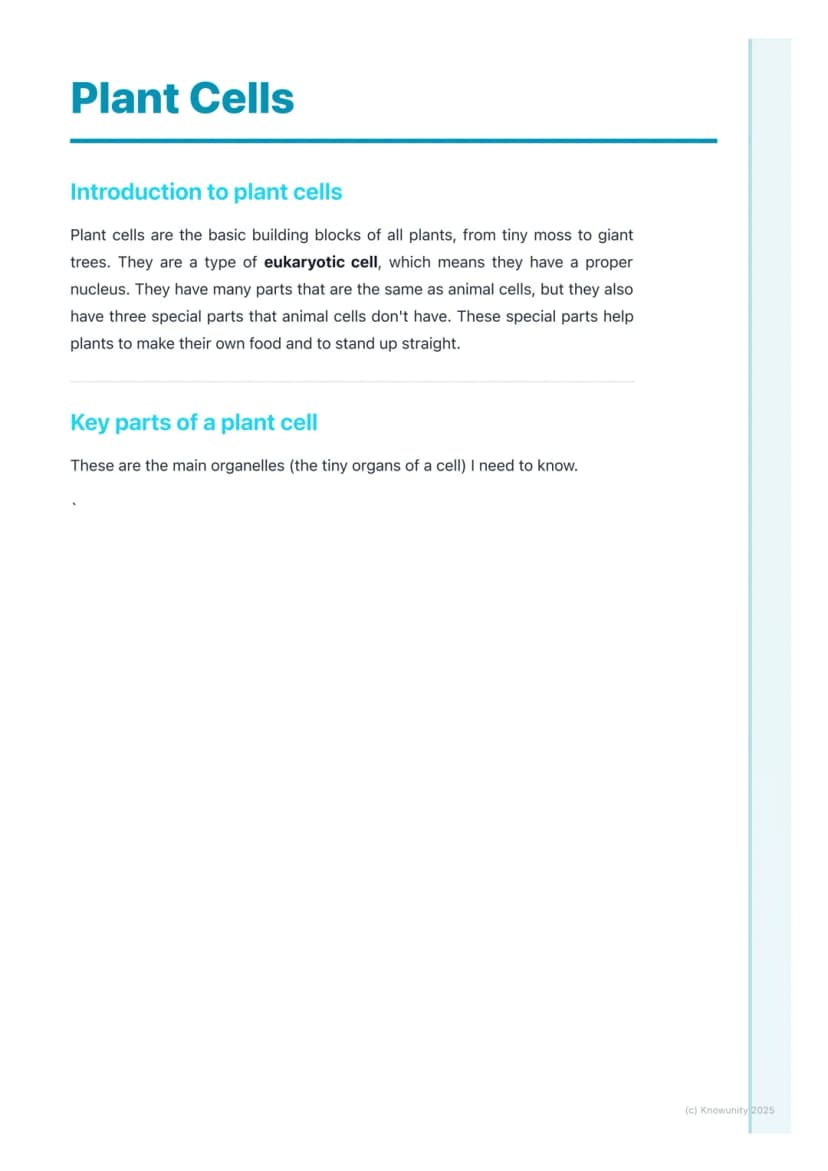
Plant cells are eukaryotic cells, which simply means they have a proper control centre called a nucleus. What makes them special is that they've got three unique parts that animal cells don't have.
These three special features are what allow plants to create their own food and stay upright without needing a skeleton. Think of them as the plant's superpowers!
Quick Tip: Remember the 3 C's for plant cells - Cell wall, Chloroplasts, and Central vacuole (the large one)!
2
of 6
Key Parts of a Plant Cell
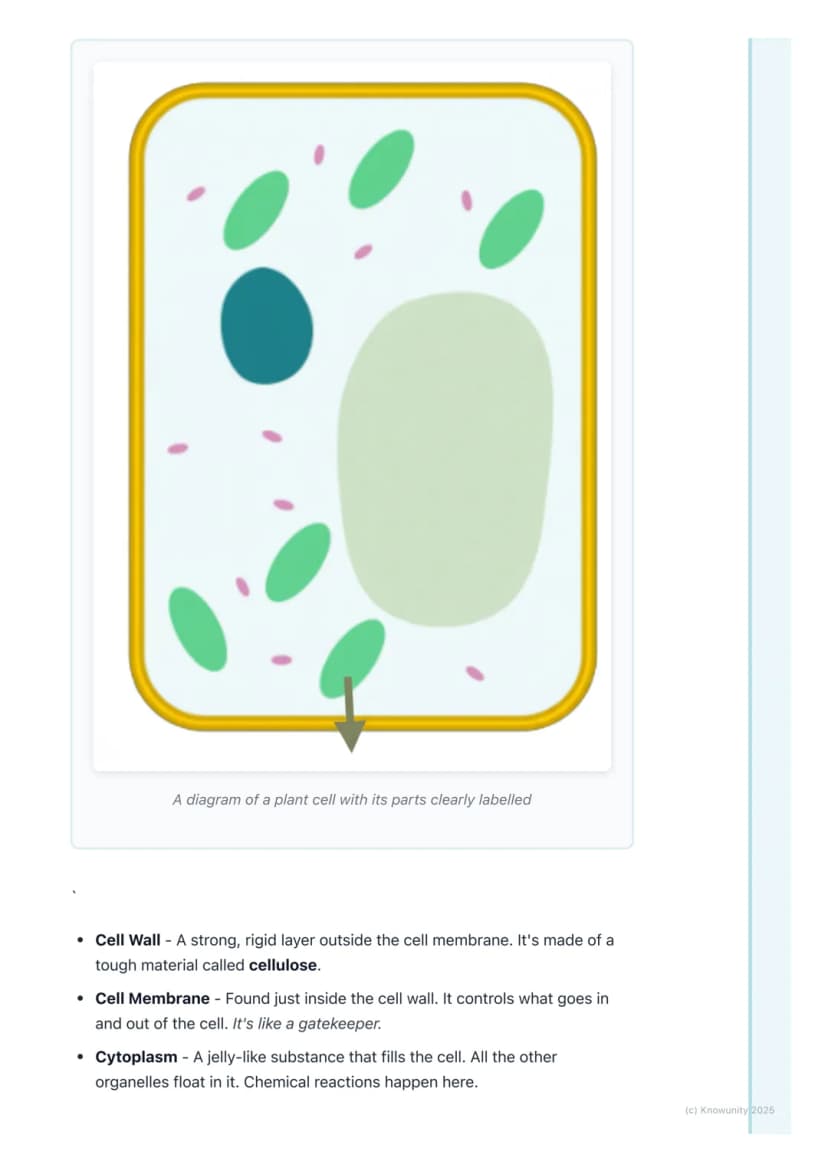
The cell wall is like a tough outer shell made of cellulose that sits outside the cell membrane. It's the plant's armour, providing structure and protection.
Inside, you'll find the cell membrane acting like a bouncer at a club - it decides what gets in and out of the cell. The cytoplasm is the jelly-like substance where all the cell's chemical reactions happen.
The nucleus is the boss of the cell, containing DNA with all the instructions. This is exactly the same job it does in your own cells!
Remember: Don't mix up the cell wall and cell membrane - the wall is on the very outside for structure, the membrane is inside for control!
3
of 6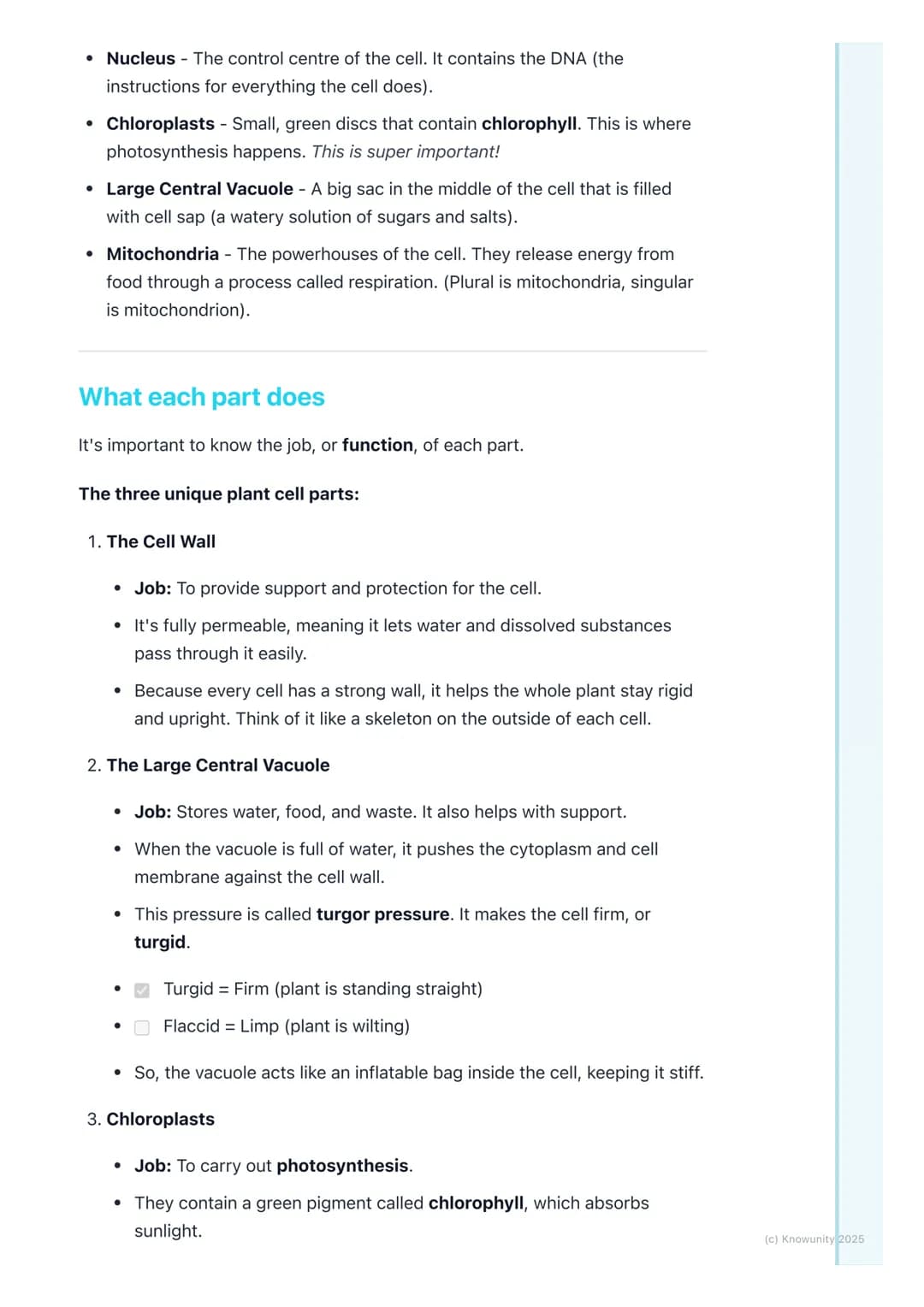
The Three Special Plant Parts
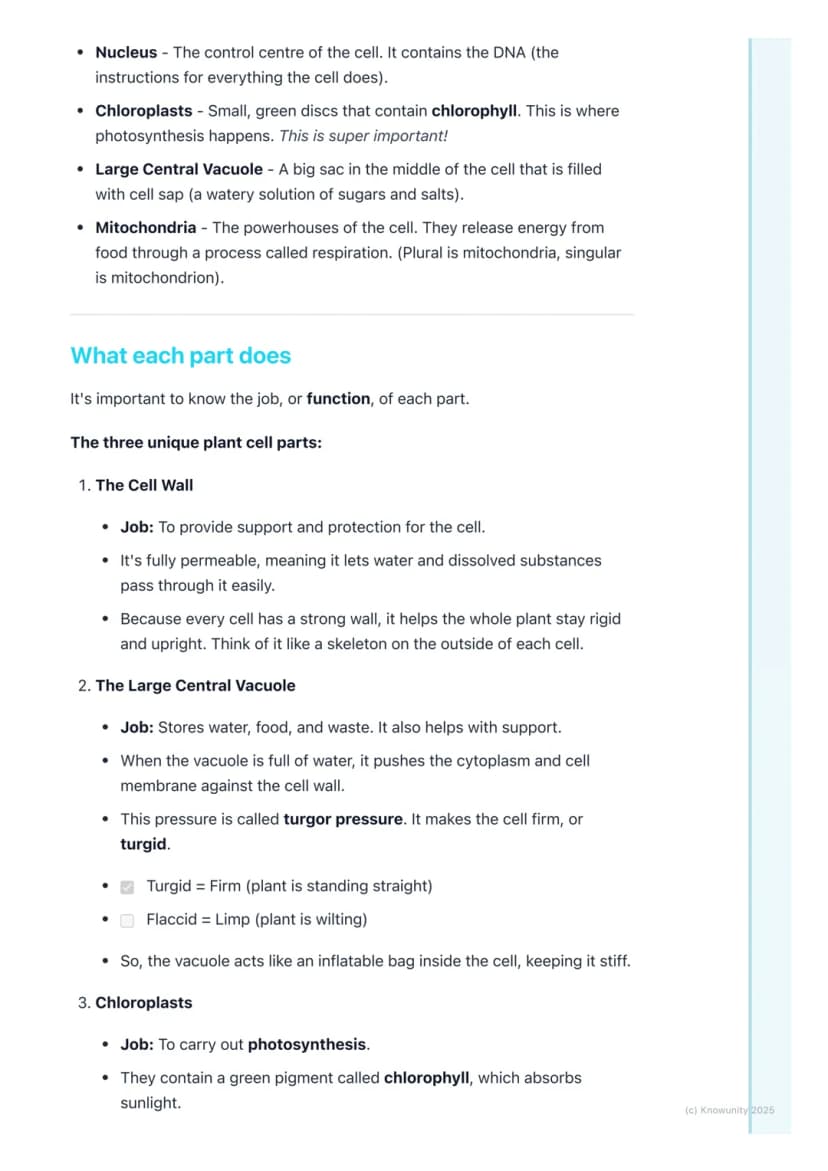
Chloroplasts are tiny green discs packed with chlorophyll that capture sunlight for photosynthesis. This is why plants are green and why they're called 'producers' in food chains.
The large central vacuole is like a water balloon inside the cell. When it's full, it creates turgor pressure that pushes against the cell wall, keeping the plant firm and upright.
Mitochondria are the powerhouses that release energy from food through respiration - just like in animal cells. Plants need energy too, even though they make their own food!
Key Concept: When plants wilt, it's because their vacuoles lose water and can't maintain turgor pressure anymore!
4
of 6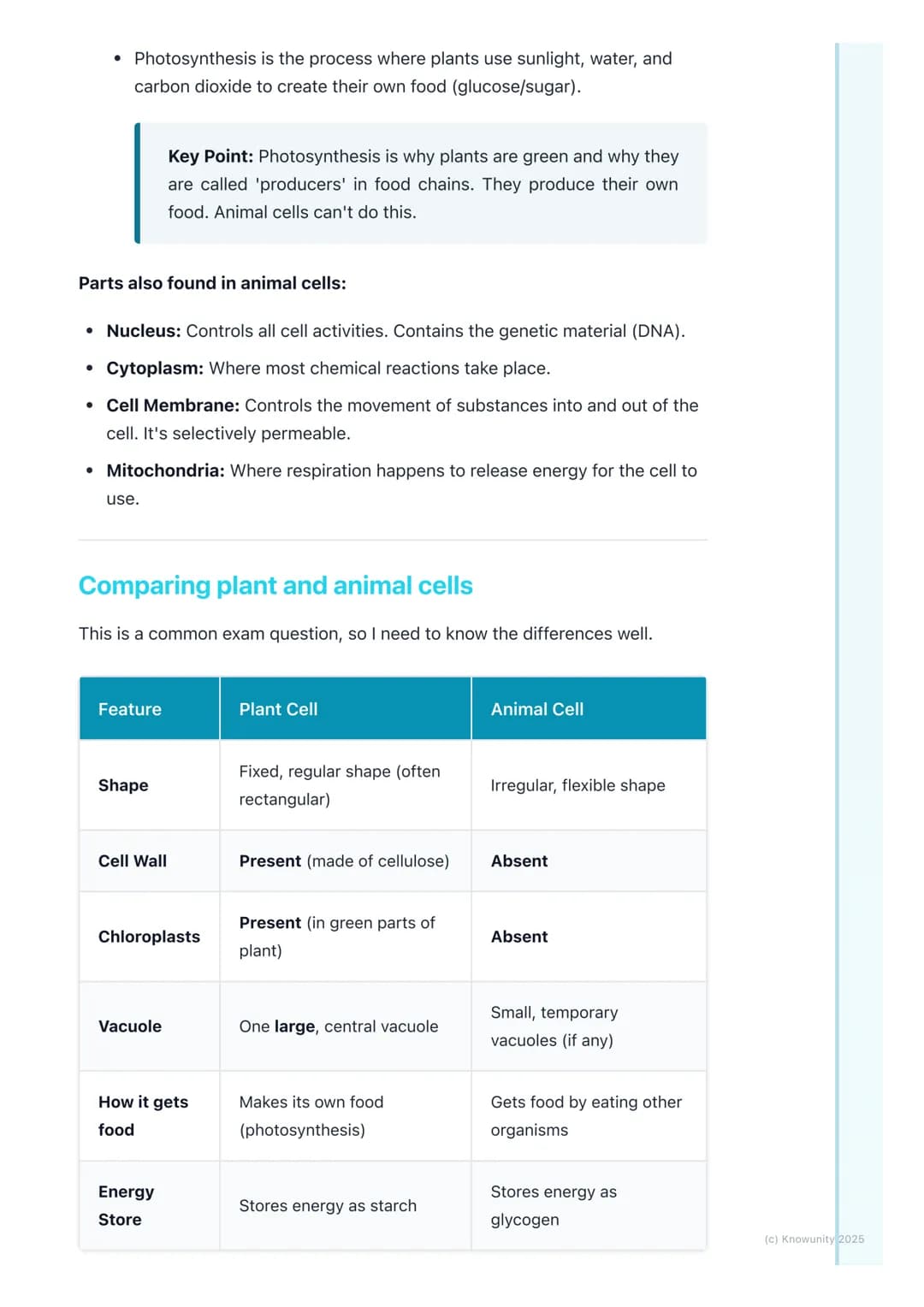
Comparing Plant and Animal Cells
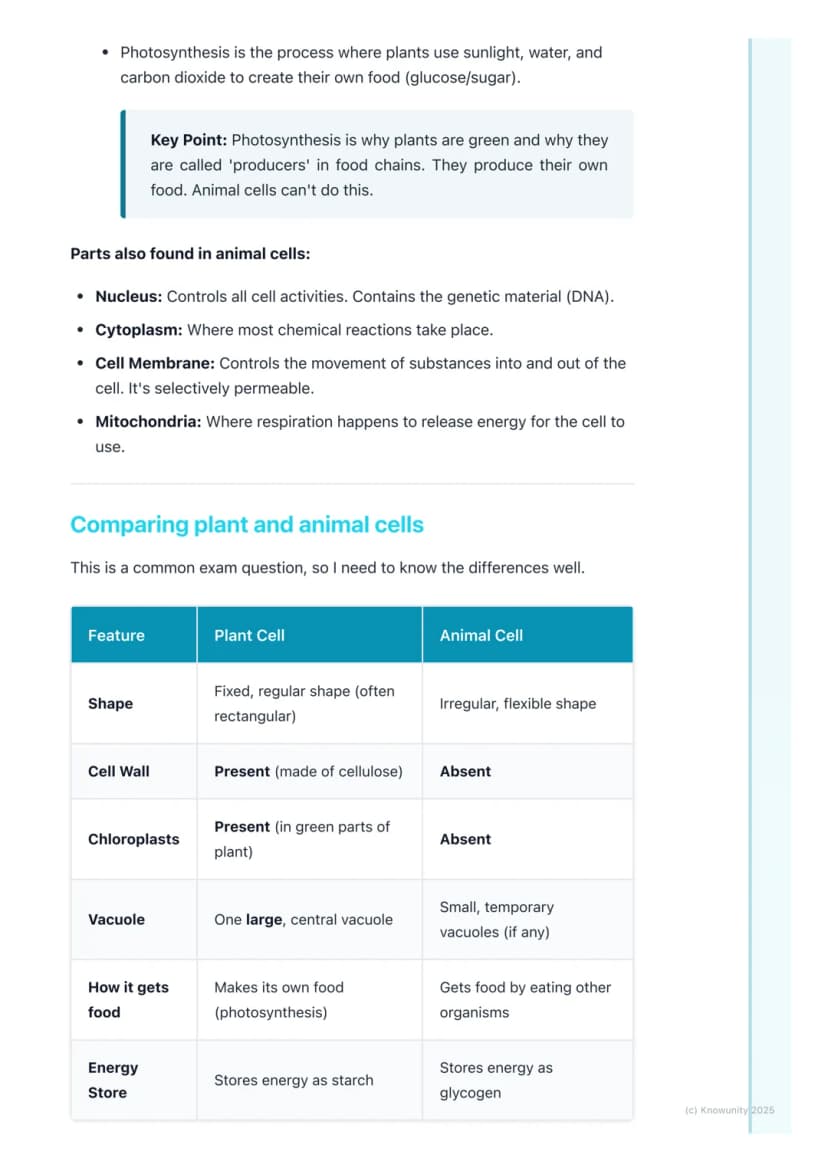
Plant cells have a fixed, rectangular shape thanks to their rigid cell wall, while animal cells are blobby and flexible. This structural difference is huge!
The biggest difference is how they get food. Plants perform photosynthesis in their chloroplasts to make glucose, whilst animals (like us) have to eat other organisms for energy.
Plants store energy as starch, but animals store it as glycogen. Plant cells also have one massive vacuole, whilst animal cells might have tiny temporary ones or none at all.
Exam Tip: A leaf cell will be packed with chloroplasts for maximum sunlight capture, but root cells won't have any since they're underground!
5
of 6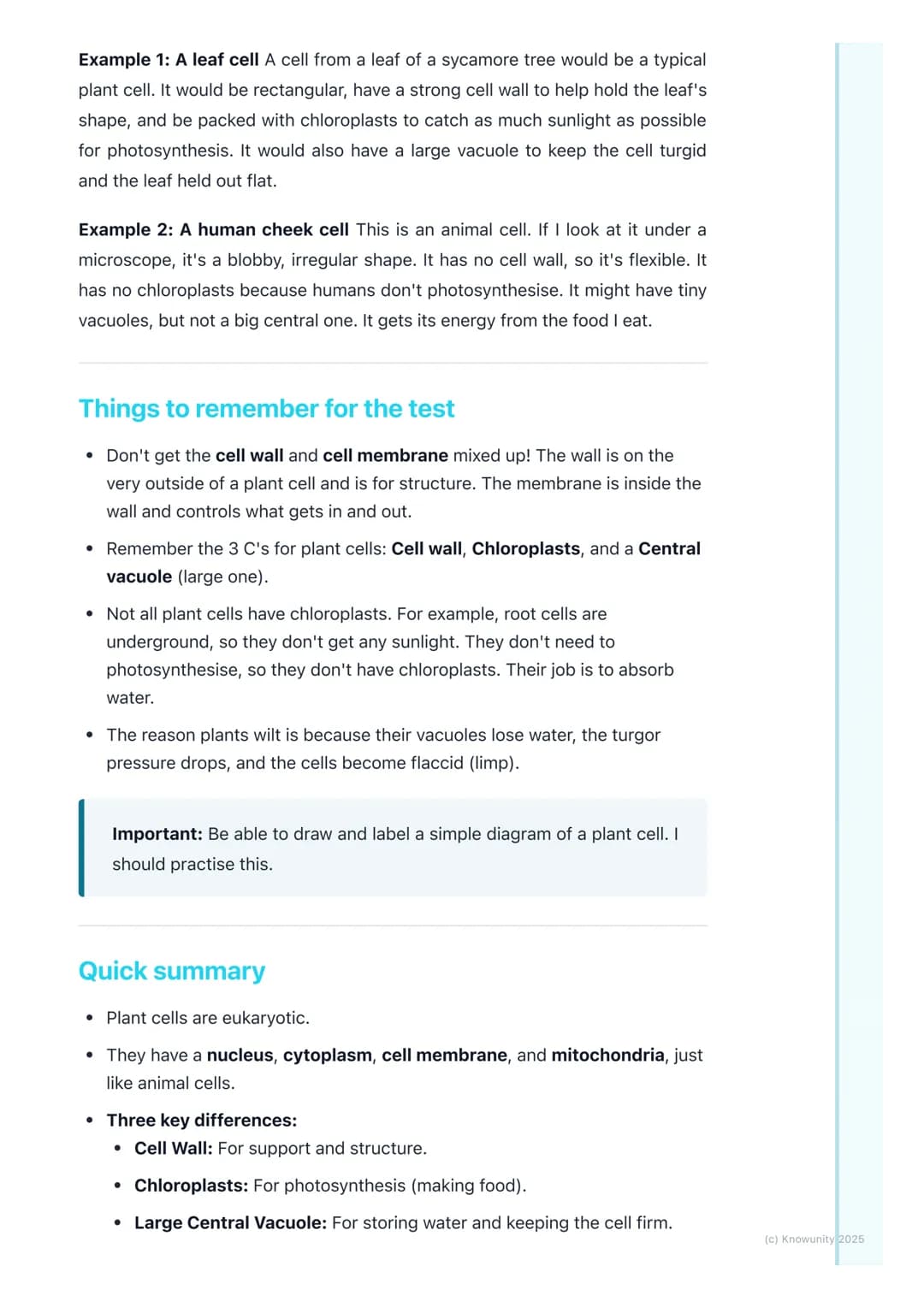
Functions and Examples
A leaf cell from a tree is the perfect example - rectangular, strong cell wall, loads of chloroplasts, and a big vacuole to keep the leaf flat and rigid for catching sunlight.
Compare this to a human cheek cell - irregular shape, no cell wall (so it's flexible), no chloroplasts (we can't photosynthesise!), and it gets energy from the food we eat.
The three unique plant features work together brilliantly: the cell wall provides structure, chloroplasts make food from sunlight, and the central vacuole maintains turgor pressure to prevent wilting.
Practice Point: Make sure you can draw and label a simple plant cell diagram - this often comes up in tests!
6
of 6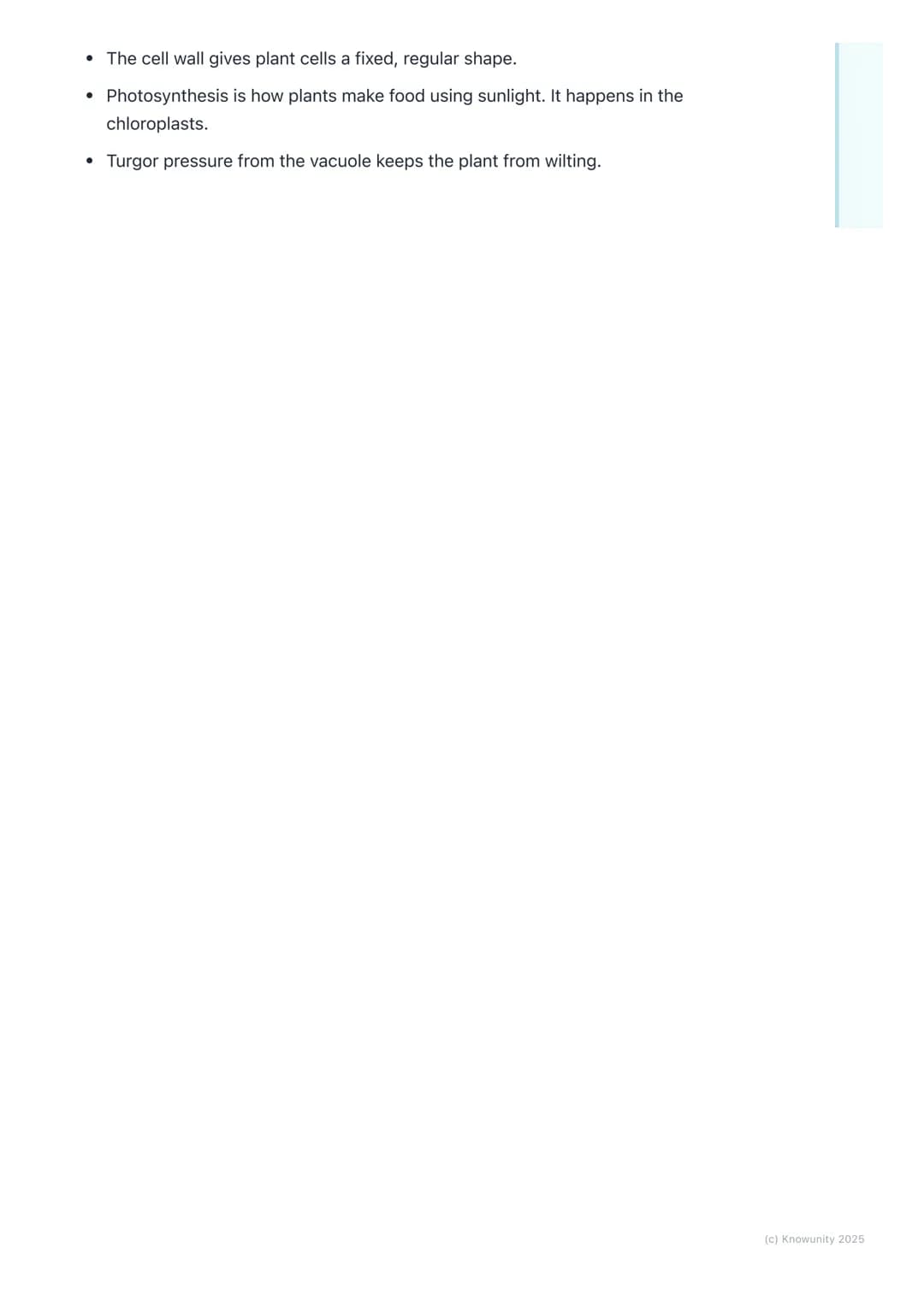
Quick Summary
Plant cells are eukaryotic with the same basic parts as animal cells - nucleus, cytoplasm, cell membrane, and mitochondria. The three key differences make all the difference though!
Cell walls give plants their fixed shape and structural support. Chloroplasts allow photosynthesis to happen, making plants the producers of ecosystems. The large central vacuole stores water and maintains turgor pressure.
When you see a plant standing tall and green, you're seeing these cellular superpowers in action. No wonder plants have been so successful on Earth!
Final Reminder: Not all plant cells have chloroplasts - root cells don't need them since they're underground and can't photosynthesise!
Azt hittük, soha nem fogod megkérdezni...
Mi a Knowunity MI társ?
MI Társunk egy diákközpontú MI eszköz, amely többet nyújt puszta válaszoknál. Millió Knowunity erőforrásra épülve releváns információkat, személyre szabott tanulási terveket, kvízeket és tartalmat biztosít közvetlenül a chatben, alkalmazkodva az egyéni tanulási utadhoz.
Honnan tudom letölteni a Knowunity appot?
Az appot letöltheted a Google Play Store-ból és az Apple App Store-ból.
Tényleg ingyenes a Knowunity?
Pontosan! Élvezd az ingyenes hozzáférést a tanulási tartalmakhoz, kapcsolódj diáktársaiddal, és kapj azonnali segítséget – mind a kezed ügyében.
Legnépszerűbb tananyagok Biology tantárgyból
7Legnépszerűbb tananyagok
9Nem találod amit keresel? Fedezz fel más tantárgyakat.
A diákok imádnak minket — és téged is fognak.
4.6/5App Store
4.7/5Google Play
Az alkalmazás nagyon könnyen használható és jól megtervezett. Mindent megtaláltam, amit eddig kerestem, és sokat tudtam tanulni a prezentációkból! Biztosan használni fogom az alkalmazást egy osztályfeladathoz! És persze inspirációként is nagyszerűen segít.
Stefan SiOS felhasználó
Ez az alkalmazás tényleg nagyszerű. Olyan sok tanulási jegyzet és segítség van benne [...]. Például a francia a problémás tantárgyam, és az alkalmazásban olyan sok segítség lehetőség van. Ennek az alkalmazásnak köszönhetően javult a franciám. Mindenkinek ajánlanám.
Samantha KlichAndroid felhasználó
Hű, tényleg lenyűgözött. Csak úgy kipróbáltam az alkalmazást, mert sokszor láttam reklámozva, és teljesen megdöbbentett. Ez az alkalmazás AZ A SEGÍTSÉG, amire az iskolában szükséged van, és mindenekelőtt olyan sok mindent kínál, mint például gyakorlatokat és összefoglalókat, amik nekem személyesen NAGYON hasznosak voltak.
AnnaiOS felhasználó
Biology8 megtekintések·Frissítve Jun 3, 2026·6 oldalUnderstanding Plant Cells: Key Structures and Differences
Ever wondered what makes plants so different from animals? It all comes down to their cells! Plant cells are the tiny building blocks that help plants make their own food and stand tall without bones.
1
of 6Regisztrálj, hogy lásd a tartalmat. Teljesen ingyenes!
- Hozzáférés minden dokumentumhoz
- Javítsd a jegyeidet
- Csatlakozz diákok millióihoz
Introduction to Plant Cells
Plant cells are eukaryotic cells, which simply means they have a proper control centre called a nucleus. What makes them special is that they've got three unique parts that animal cells don't have.
These three special features are what allow plants to create their own food and stay upright without needing a skeleton. Think of them as the plant's superpowers!
Quick Tip: Remember the 3 C's for plant cells - Cell wall, Chloroplasts, and Central vacuole (the large one)!
2
of 6Regisztrálj, hogy lásd a tartalmat. Teljesen ingyenes!
- Hozzáférés minden dokumentumhoz
- Javítsd a jegyeidet
- Csatlakozz diákok millióihoz
Key Parts of a Plant Cell
The cell wall is like a tough outer shell made of cellulose that sits outside the cell membrane. It's the plant's armour, providing structure and protection.
Inside, you'll find the cell membrane acting like a bouncer at a club - it decides what gets in and out of the cell. The cytoplasm is the jelly-like substance where all the cell's chemical reactions happen.
The nucleus is the boss of the cell, containing DNA with all the instructions. This is exactly the same job it does in your own cells!
Remember: Don't mix up the cell wall and cell membrane - the wall is on the very outside for structure, the membrane is inside for control!
3
of 6Regisztrálj, hogy lásd a tartalmat. Teljesen ingyenes!
- Hozzáférés minden dokumentumhoz
- Javítsd a jegyeidet
- Csatlakozz diákok millióihoz
The Three Special Plant Parts
Chloroplasts are tiny green discs packed with chlorophyll that capture sunlight for photosynthesis. This is why plants are green and why they're called 'producers' in food chains.
The large central vacuole is like a water balloon inside the cell. When it's full, it creates turgor pressure that pushes against the cell wall, keeping the plant firm and upright.
Mitochondria are the powerhouses that release energy from food through respiration - just like in animal cells. Plants need energy too, even though they make their own food!
Key Concept: When plants wilt, it's because their vacuoles lose water and can't maintain turgor pressure anymore!
4
of 6Regisztrálj, hogy lásd a tartalmat. Teljesen ingyenes!
- Hozzáférés minden dokumentumhoz
- Javítsd a jegyeidet
- Csatlakozz diákok millióihoz
Comparing Plant and Animal Cells
Plant cells have a fixed, rectangular shape thanks to their rigid cell wall, while animal cells are blobby and flexible. This structural difference is huge!
The biggest difference is how they get food. Plants perform photosynthesis in their chloroplasts to make glucose, whilst animals (like us) have to eat other organisms for energy.
Plants store energy as starch, but animals store it as glycogen. Plant cells also have one massive vacuole, whilst animal cells might have tiny temporary ones or none at all.
Exam Tip: A leaf cell will be packed with chloroplasts for maximum sunlight capture, but root cells won't have any since they're underground!
5
of 6Regisztrálj, hogy lásd a tartalmat. Teljesen ingyenes!
- Hozzáférés minden dokumentumhoz
- Javítsd a jegyeidet
- Csatlakozz diákok millióihoz
Functions and Examples
A leaf cell from a tree is the perfect example - rectangular, strong cell wall, loads of chloroplasts, and a big vacuole to keep the leaf flat and rigid for catching sunlight.
Compare this to a human cheek cell - irregular shape, no cell wall (so it's flexible), no chloroplasts (we can't photosynthesise!), and it gets energy from the food we eat.
The three unique plant features work together brilliantly: the cell wall provides structure, chloroplasts make food from sunlight, and the central vacuole maintains turgor pressure to prevent wilting.
Practice Point: Make sure you can draw and label a simple plant cell diagram - this often comes up in tests!
6
of 6Regisztrálj, hogy lásd a tartalmat. Teljesen ingyenes!
- Hozzáférés minden dokumentumhoz
- Javítsd a jegyeidet
- Csatlakozz diákok millióihoz
Quick Summary
Plant cells are eukaryotic with the same basic parts as animal cells - nucleus, cytoplasm, cell membrane, and mitochondria. The three key differences make all the difference though!
Cell walls give plants their fixed shape and structural support. Chloroplasts allow photosynthesis to happen, making plants the producers of ecosystems. The large central vacuole stores water and maintains turgor pressure.
When you see a plant standing tall and green, you're seeing these cellular superpowers in action. No wonder plants have been so successful on Earth!
Final Reminder: Not all plant cells have chloroplasts - root cells don't need them since they're underground and can't photosynthesise!
Azt hittük, soha nem fogod megkérdezni...
Mi a Knowunity MI társ?
MI Társunk egy diákközpontú MI eszköz, amely többet nyújt puszta válaszoknál. Millió Knowunity erőforrásra épülve releváns információkat, személyre szabott tanulási terveket, kvízeket és tartalmat biztosít közvetlenül a chatben, alkalmazkodva az egyéni tanulási utadhoz.
Honnan tudom letölteni a Knowunity appot?
Az appot letöltheted a Google Play Store-ból és az Apple App Store-ból.
Tényleg ingyenes a Knowunity?
Pontosan! Élvezd az ingyenes hozzáférést a tanulási tartalmakhoz, kapcsolódj diáktársaiddal, és kapj azonnali segítséget – mind a kezed ügyében.
Legnépszerűbb tananyagok Biology tantárgyból
7Legnépszerűbb tananyagok
9Nem találod amit keresel? Fedezz fel más tantárgyakat.
A diákok imádnak minket — és téged is fognak.
4.6/5App Store
4.7/5Google Play
Az alkalmazás nagyon könnyen használható és jól megtervezett. Mindent megtaláltam, amit eddig kerestem, és sokat tudtam tanulni a prezentációkból! Biztosan használni fogom az alkalmazást egy osztályfeladathoz! És persze inspirációként is nagyszerűen segít.
Stefan SiOS felhasználó
Ez az alkalmazás tényleg nagyszerű. Olyan sok tanulási jegyzet és segítség van benne [...]. Például a francia a problémás tantárgyam, és az alkalmazásban olyan sok segítség lehetőség van. Ennek az alkalmazásnak köszönhetően javult a franciám. Mindenkinek ajánlanám.
Samantha KlichAndroid felhasználó
Hű, tényleg lenyűgözött. Csak úgy kipróbáltam az alkalmazást, mert sokszor láttam reklámozva, és teljesen megdöbbentett. Ez az alkalmazás AZ A SEGÍTSÉG, amire az iskolában szükséged van, és mindenekelőtt olyan sok mindent kínál, mint például gyakorlatokat és összefoglalókat, amik nekem személyesen NAGYON hasznosak voltak.
AnnaiOS felhasználó